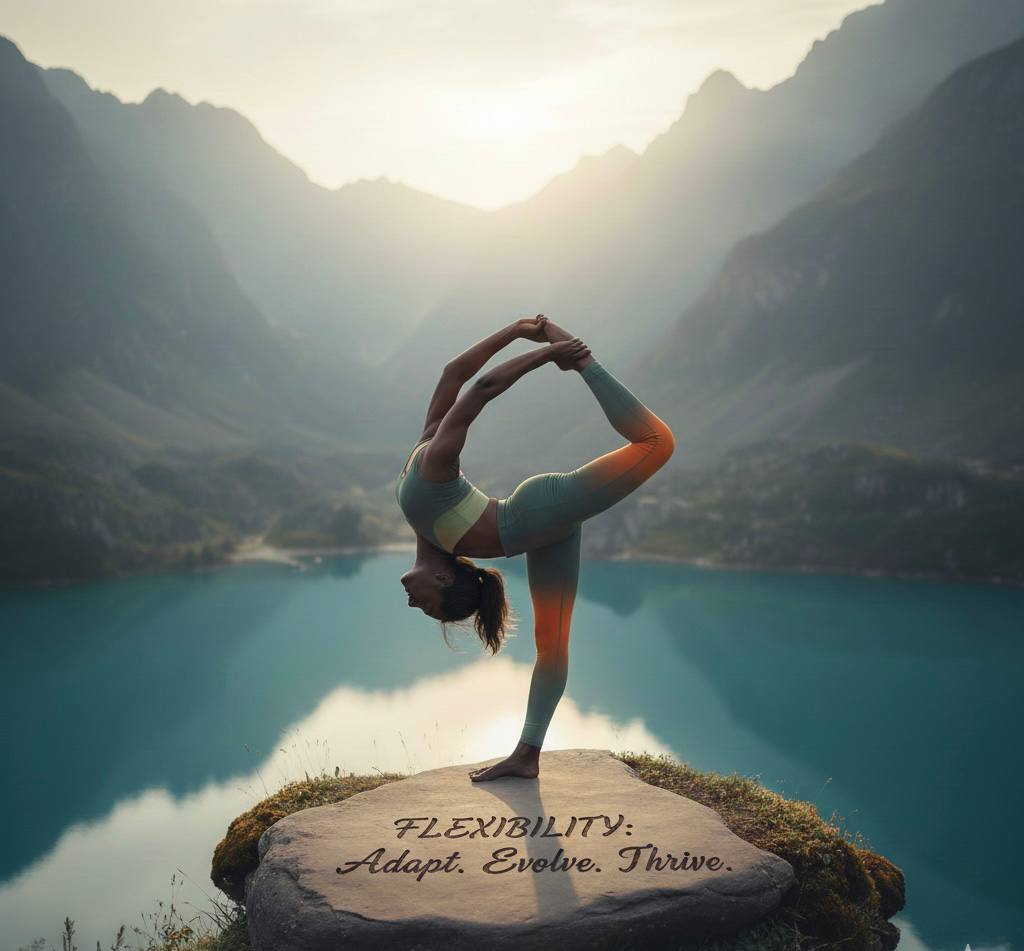

When it comes to building a healthy, resilient body, one quality is often overlooked: flexibility. It's just as important as cardiovascular endurance and muscular strength. Flexibility allows you to move freely, without pain, and to perform everyday activities with ease.
Understanding Flexibility in Physical Fitness
In the realm of physical fitness, flexibility refers to the capacity of your joints and muscles to move freely and fully through their complete range of motion (ROM) without discomfort or restriction. This crucial aspect of fitness involves not only the muscles but also the ligaments and tendons surrounding a joint, which must be sufficiently flexible to stretch and extend.
This ability to achieve optimal movement is essential for carrying out daily activities, such as reaching for objects on high shelves or bending down to tie your shoes, without strain or limitation.
Flexibility plays a vital role in enhancing overall performance in various physical activities. It contributes to better posture by allowing the body to maintain proper alignment during movement and at rest. A well-balanced level of flexibility promotes efficient movement patterns, which can lead to more effective workouts and improved athletic performance.
Furthermore, maintaining flexibility is key to preventing incorrect body alignment, a factor that can lead to repetitive strain injuries over time. By ensuring that muscles can lengthen adequately, flexibility helps maintain appropriate muscle length and balance, which supports joint health and optimal functioning.
Overall, flexibility is not just an attribute; it’s a fundamental component of a well-rounded fitness approach that supports physical well-being and longevity.
Types of Flexibility
To effectively improve your flexibility, it’s helpful to understand that there are two main types.
- Static Flexibility: This is the ability to hold a stretch in a fixed position. Think of a hamstring stretch where you hold a stretch for 30 seconds. This is the most common type of stretching used to improve the range of motion.
- Dynamic Flexibility: This is the ability to move a joint through its full range of motion. This is the type of flexibility you use during warm-ups for sports or exercise. Examples include leg swings and arm circles. To learn more about the different types of flexibility, you can refer to this detailed article from Physiopedia.
Benefits of being Flexible
Improving your flexibility comes with a wide range of benefits for your body and your daily life.
- Improved Range of Motion: This allows your joints to move more freely, which is crucial for exercises and everyday movements.
- Reduced Risk of Injury: When your muscles and joints are flexible, they are less likely to be strained or injured during physical activity.
- Pain Relief: Stretching can help alleviate muscle tension and soreness, which can be particularly helpful for people who sit for long periods.
- Better Posture: Tight muscles can pull your body out of alignment. By improving your flexibility, you can correct imbalances and achieve better posture.
How to Improve Flexibility
To improve your flexibility, consistency is key. With a little research, I've found a few core practices that are highly effective.
- Daily Stretching: Dedicate at least 5-10 minutes each day to stretching. This can be done in the morning to wake up your body or in the evening to relieve muscle tension.
- Warm Up First: Never stretch cold muscles. Do a light warm-up like a brisk walk or some jumping jacks for a few minutes to get blood flowing to your muscles before you begin.
- Hold Stretches: For static stretching, hold each stretch for 20-30 seconds. Avoid bouncing, as this can cause injury.
- Listen to Your Body: Stretch to the point where you feel a gentle pull, but not pain. Pushing too hard can lead to muscle tears.
- Use Different Techniques: Incorporate a variety of stretches to target different muscle groups. This includes stretches for your legs, back, shoulders, and neck.
Flexibility Exercises to Practice
- Standing Hamstring Stretch: Stand with your feet hip-width apart and gently bend forward, reaching for your toes.
- Cat-Cow Stretch: On all fours, alternate arching your back up and down to stretch your spine.
- Triceps Stretch: With one arm bent behind your head, use your other hand to gently pull your elbow toward the center of your back.
- Butterfly Stretch: Sit on the floor with the soles of your feet together, and gently press your knees toward the floor. To learn more about these and other exercises, this article from Verywell Fit provides great examples.
Key Takeaways
Flexibility is a key component of a complete fitness routine. By dedicating a few minutes each day to stretching and understanding the different types of flexibility, you can significantly improve your mobility, reduce your risk of injury, and even alleviate daily aches and pains. It's a simple change that can lead to big results for your overall well-being.